Article: Why Your Dog's Bed Might Be Making Them Sick — And What to Look For
Why Your Dog's Bed Might Be Making Them Sick — And What to Look For
You wash your dog's bed every few weeks. Maybe every month. And yet somehow, that familiar smell creeps back within days. Sound about right?
Here's something most pet parents don't realize: the problem isn't your cleaning routine — it's the bed itself.
The Hidden Problem Inside Most Pet Beds
Traditional pet beds are made with standard polyester fill and fabric covers. They absorb moisture from drool, sweat, and damp fur, and that moisture gets trapped deep inside the padding where your washing machine can't reach.
Within two to three weeks, bacteria colonies begin forming in the inner fill material. A 2021 study from NSF International found that pet bowls and pet beds are among the top ten germiest surfaces in an average home — ranking higher than toilet seats.
Surface-level antimicrobial sprays and removable covers help, but they only address what's on the outside. The core of the bed — where moisture sits longest — remains untreated.
Built-In vs. Surface-Level: Why It Matters
There's a meaningful difference between antimicrobial technology that's embedded into the material during manufacturing and coatings applied after the fact.
Surface treatments wash off over time. After five to ten wash cycles, most spray-on antimicrobial coatings lose 40–60% of their effectiveness. That means the "antimicrobial" bed you bought six months ago may no longer be doing its job.
Built-in antimicrobial technology works differently. When the antibacterial agent is integrated into the fiber structure itself, it doesn't wash out. It continues to inhibit bacterial growth for the life of the product — not just the first few months.
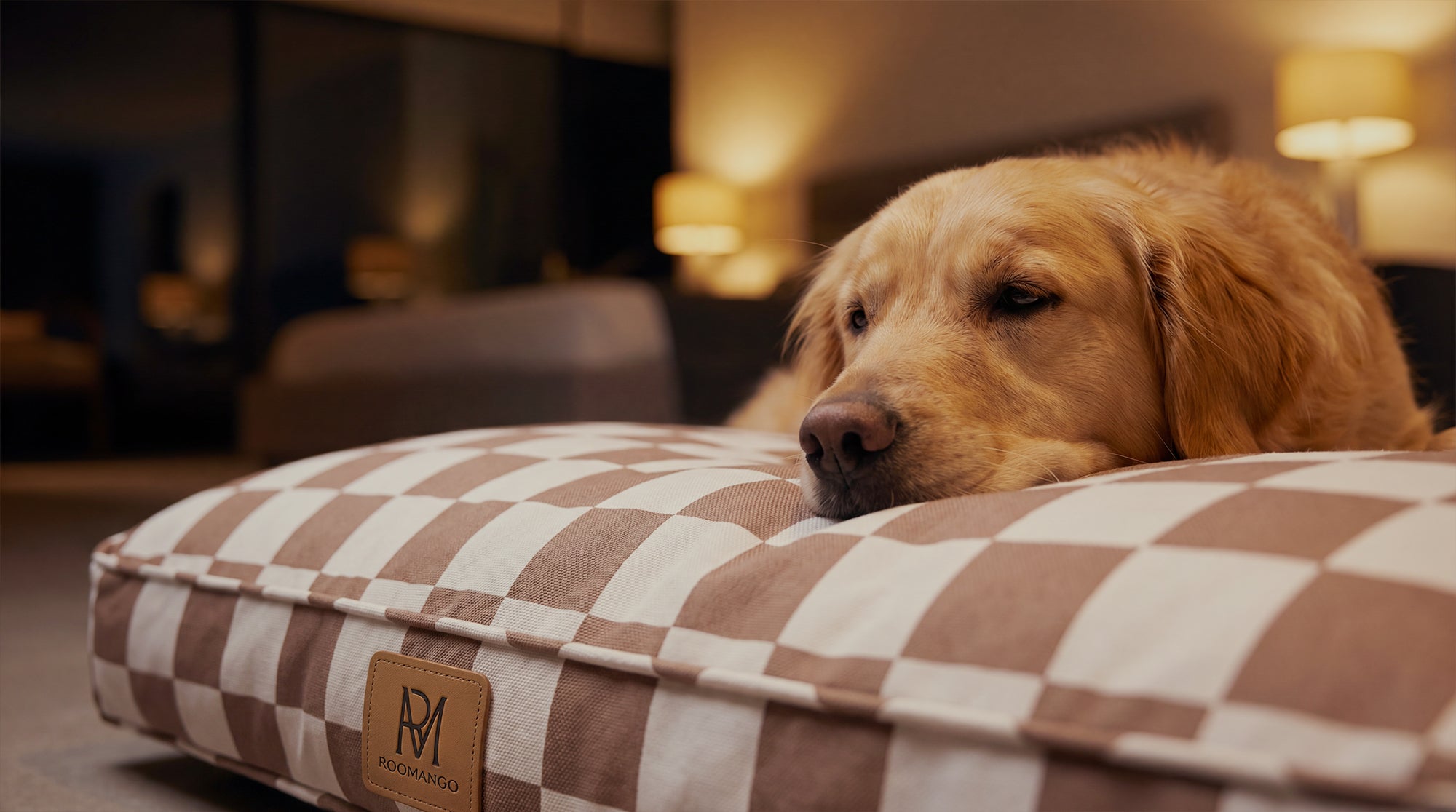
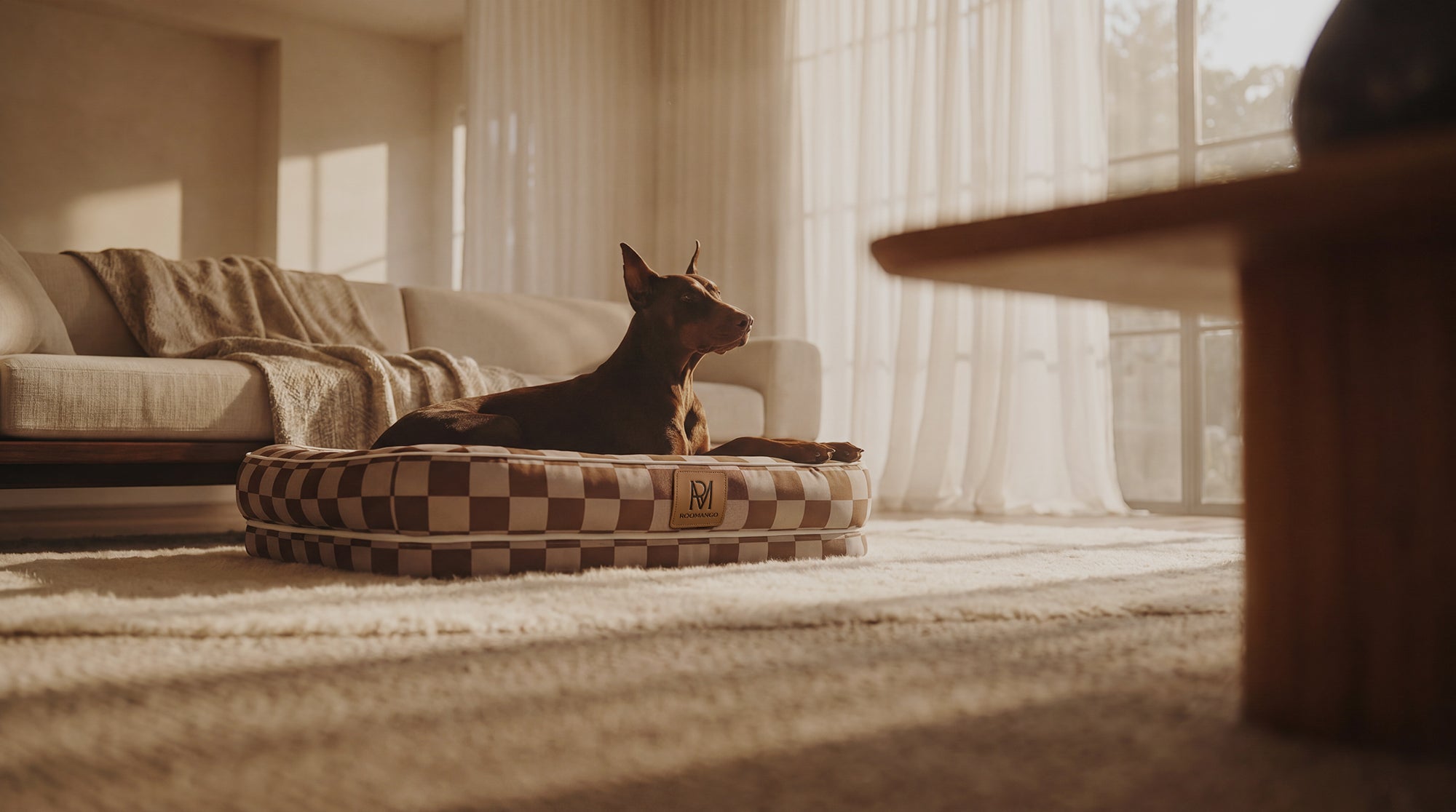
At Roomango, this is exactly how we build our dog beds. Our antimicrobial and odor-resistant properties are part of the material composition, verified through independent SGS laboratory testing. It's not a marketing layer. It's a structural one.
What to Look for When Shopping for a Dog Bed
If you're evaluating pet beds, here are the questions worth asking:
Is the antimicrobial treatment built into the material or applied as a coating? If the product page says "treated with" or "coated in," that's a surface application. Look for language like "integrated," "built-in," or "embedded in the fiber."
Does the brand provide third-party lab verification? Claims are easy. SGS, Intertek, or equivalent testing certificates are what separate marketing from reality.
Is the cover removable and the inner core designed to resist moisture? Even with built-in protection, you want a bed that doesn't trap water in the first place. Breathable, quick-dry materials make a significant difference.
Does the bed hold its shape after months of use? Antibacterial properties mean nothing if the bed flattens out and your dog ends up sleeping on the floor with extra steps.
A Bed That Works as Hard as Your Dog Plays
We designed Roomango beds because we were tired of the same cycle: buy a bed, wash it constantly, replace it in six months. Our beds start at $69.90 and are built to stay fresh, supportive, and intact through real daily use — not just the first unboxing photo.
Every Roomango bed comes with SGS-certified antimicrobial materials, not aftermarket sprays. Because your dog deserves better than a bed that only smells clean on day one.