Article: The Real Cost of a Cheap Dog Bed — Why Pet Parents Replace Beds Every 6 Months
The Real Cost of a Cheap Dog Bed — Why Pet Parents Replace Beds Every 6 Months
Here's a pattern that plays out in millions of households every year:
You buy a dog bed for $25–$35 on Amazon. It looks fine in the listing photo. It arrives, your dog seems to like it, and for about six to eight weeks everything is great.
Then the filling starts clumping. The cover gets that smell that doesn't wash out. The stitching on one side starts pulling apart. You flip it over, push the filling around, wash it one more time — and then quietly start browsing for a replacement.
Sound familiar? You're not alone. The average pet owner replaces their dog's bed two to three times per year. At $30 a pop, that's $60–$90 annually — and that's before you count the laundry detergent, the time spent washing covers, and the guilt of tossing another foam-filled bed into a landfill.
Why Cheap Beds Fail
It's not a mystery. Budget pet beds cut costs in three predictable places:
Fill quality. Cheap polyester fiberfill compresses permanently under weight. It doesn't bounce back. Within eight weeks, a 50-pound dog has essentially crushed the fill into a flat mat. There's no structural support left — your dog is sleeping on fabric over floor.
Fabric durability. Lower thread count, thinner weaves, no reinforcement at stress points. Dogs circle before they lie down. They dig. They stretch. Budget fabrics aren't built for that repeated mechanical stress.
No odor management. Without integrated antimicrobial properties, moisture and bacteria accumulate in the fill. Washing helps temporarily, but each wash cycle also degrades the cheap fill further — so you're trading odor for structural integrity.
The Math That Changes the Conversation
Let's run the numbers on a two-year timeline.
Budget bed scenario: $30 bed × 3 replacements per year × 2 years = $180. Plus the time and detergent for weekly washes that don't fully work. Plus the environmental cost of disposing six beds.
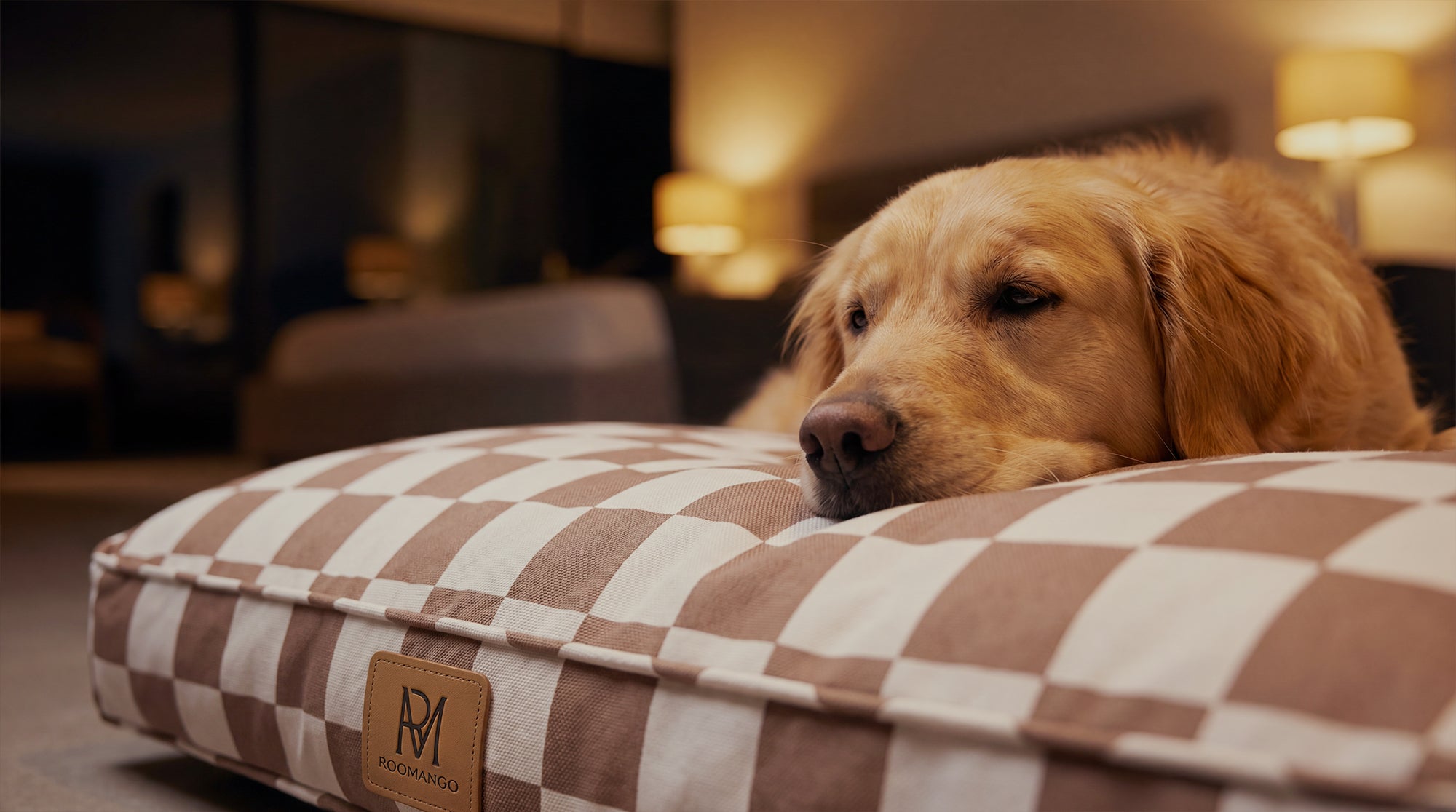
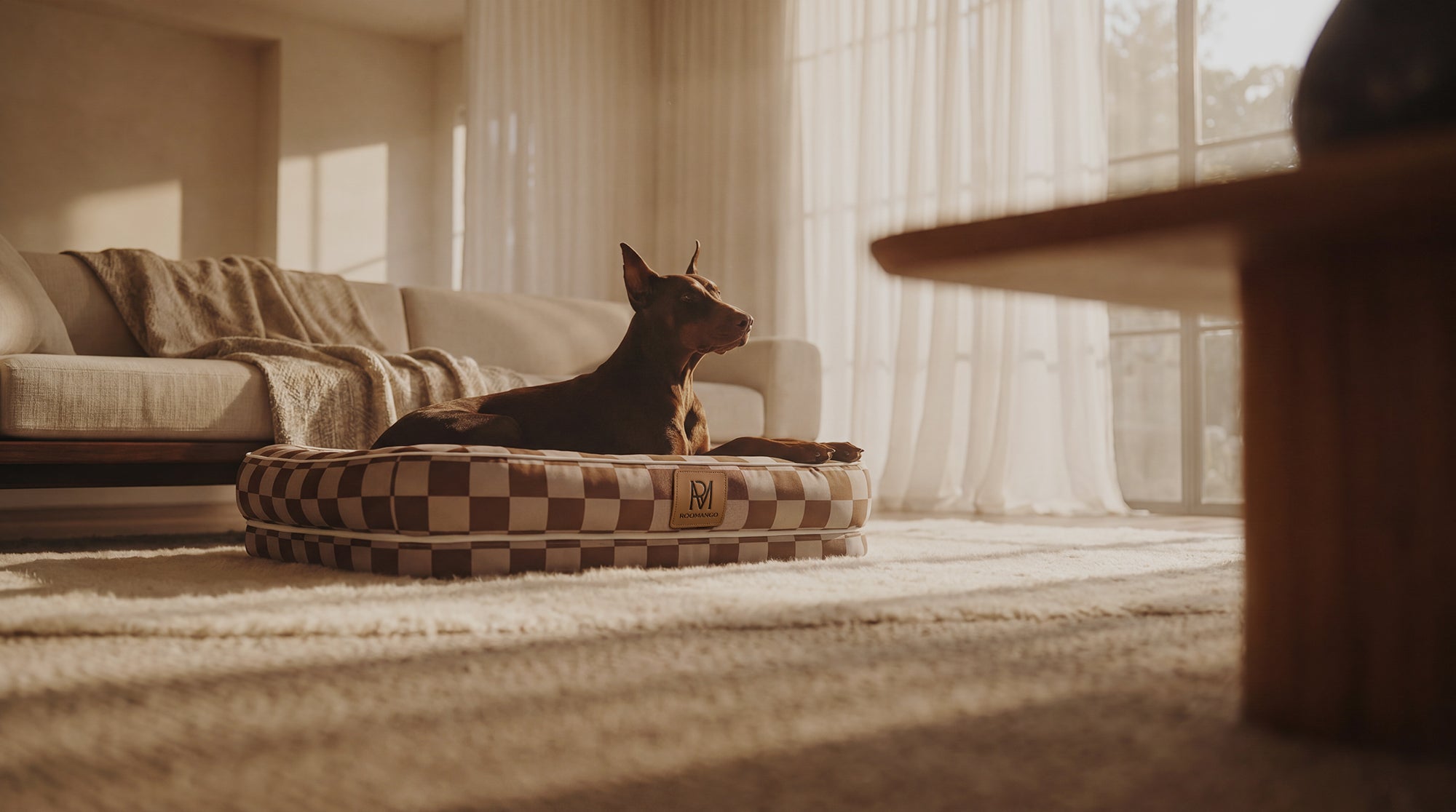
Quality bed scenario: A Roomango bed at $99.90 lasts the full two years. The antimicrobial fill stays fresh longer between washes. The structural foam holds its shape. One purchase, dramatically less laundry, zero replacement guilt.
The "expensive" bed costs $80 less over two years. And your dog sleeps better the entire time.
What Separates a Bed That Lasts
If you're upgrading from the replacement cycle, here's what to evaluate:
Structural foam or high-density fill that maintains shape under repeated compression. Ask yourself: what is the bed made of on the inside? If the listing doesn't say, assume it's the cheapest option.
Reinforced stitching at seams and corners — the first failure points on any bed. Double or triple stitching at stress points is the difference between a bed that lasts six months and one that lasts two years.
Integrated antimicrobial materials that don't wash out. This is the single biggest factor in whether a bed stays fresh. Surface coatings degrade. Built-in protection doesn't.
A removable, machine-washable cover with a durable zipper. You should be able to wash the cover without stressing about whether the fill underneath is getting ruined.
Buy It Once
Roomango beds are designed around a simple principle: buy a bed once and stop thinking about it. Our SGS-certified antimicrobial materials resist odor at the structural level. Our fills are engineered for long-term shape retention. And our covers are built to withstand the reality of life with dogs — not just the photo shoot.
Starting at $69.90, a Roomango bed isn't the cheapest option on your screen today. But it's almost certainly the cheapest option over the next two years.